
Castration
Castration, the surgical removal of both testicles, is a commonly performed routine surgical procedure that is usually quick and straightforward
Learn more
The potential benefits of castration
There are many medical and behavioural benefits to having a gelding (castrated horse), compared to keeping a stallion.
If you are planning to breed from your horse, then clearly castration is not a consideration, but if you are not then castration is strongly advised.
Stallions can be aggressive, territorial, difficult to handle and usually require specialist stabling and field management.
Castration can be performed at any age. It is traditionally performed in the spring of the yearling year, but can be performed earlier, as a foal, or later in life.
When to perform castration
Castration can be performed at any time of year, but to minimise the risk of post-operative complications, they should ideally be castrated either in the spring or autumn, in order to avoid the flies of summer and the deep mud of winter.
Both testicles must have descended into the scrotum for a colt to be castrated. If only one is present then please call to discuss with one of our equine vets.
Methods of castration
There are two methods of performing a castration, depending on the horse’s age, size and previous handling.
Standing castration under sedation
This is the most common method, as it avoids the risks of a general anaesthetic.
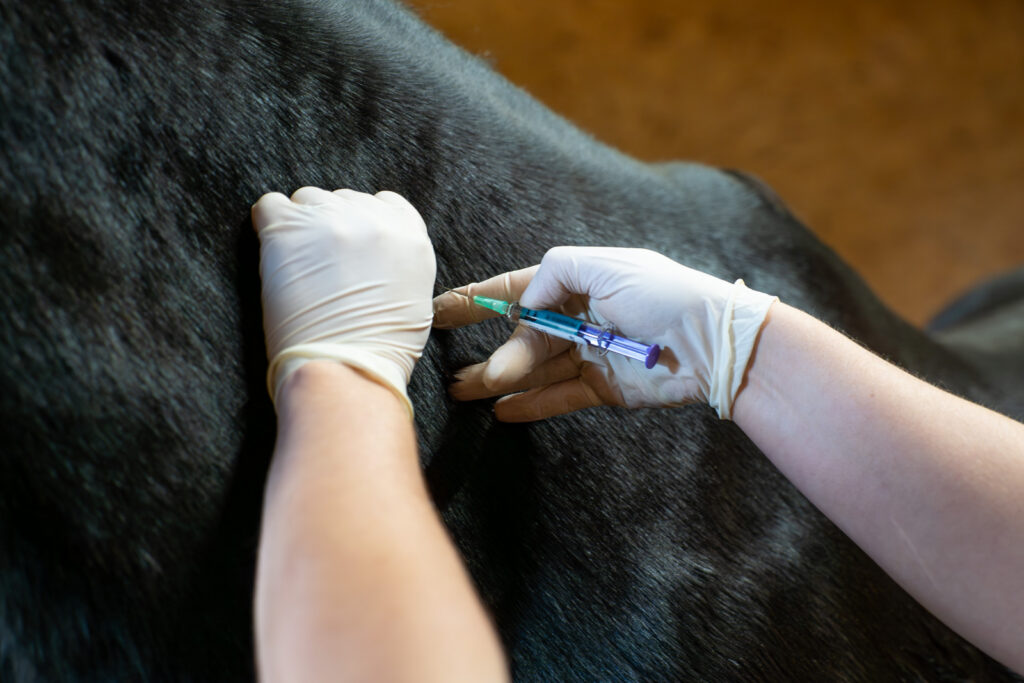
- Horses are heavily sedated and local anaesthetic is injected into the scrotum and testicles before surgery is performed.
- This method does demand that the horse has a reasonable temperament and is large enough for the vet to be able to work safely underneath.
Castration under general anaesthetic
- Castration under general anaesthetic is usually performed in small ponies and Shetlands and is quicker and safer (for both our vets and patients) in poorly handled or very nervous horses.
- Castration under general anaesthetic is also recommended in donkeys and certain other breeds where there is an increased risk of evisceration (herniation of the intestine through the surgical wound).
Most castrations are performed via an open surgical technique where the wounds are left fully open to drain.
Occasionally, a closed technique is performed in which the wound is closed with sutures.
This avoids the risk of evisceration and herniation, but must be performed in a suitably clean environment as closing the incised layers stops drainage and therefore stops the wound cleansing itself.
For further advice, please contact our team on 01736 362215.